News
Spanish police dismantle a daring network using helicopters to transport drugs from Morocco
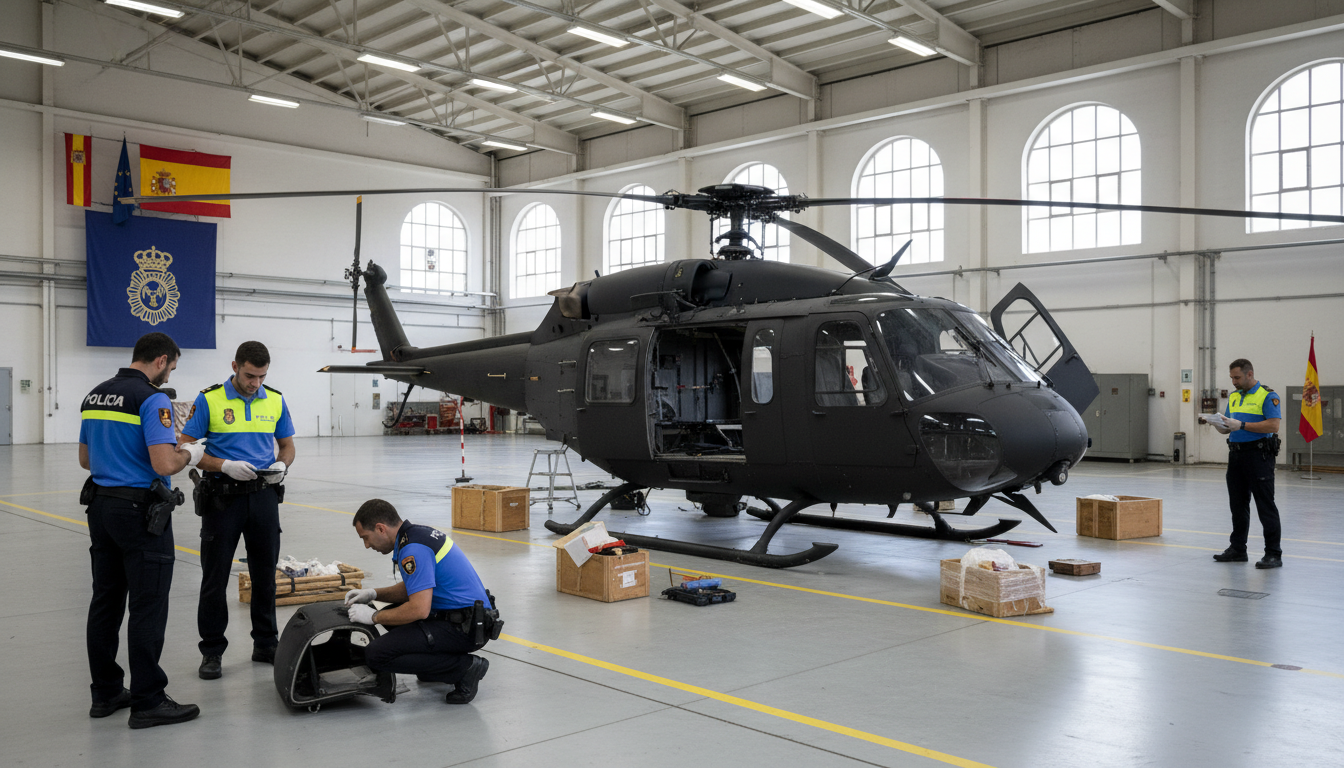
The ingenuity of illicit organizations constantly pushes the boundaries of cross-border logistics. Recently, a large-scale operation led by the Spanish police highlighted a transport method as costly as it is effective: the use of aerial vectors to bypass traditional maritime controls. This crackdown reveals an increased professionalization of drug trafficking, where material investments rival those of small legitimate transport companies.
A high-precision aerial logistics between the two continents
The era when simple fast boats, the famous “Go-Fast”, were the only transit vector seems over for the wealthiest networks. The recent dismantling carried out by Iberian law enforcement exposed a structure capable of mobilizing helicopters to transport large quantities of narcotics from Morocco to southern Spain. These aircraft, often modified to maximize their load capacity, fly at very low altitude and without signal lights to evade coastal surveillance radars.
This mode of operation requires sharp technical skills. The pilots recruited by this criminal network often have significant flight experience, turning an illegal activity into a true commando operation. The complexity of aircraft maintenance and the management of night flight plans testify to an almost military organization. 🚁
International cooperation and technological surveillance
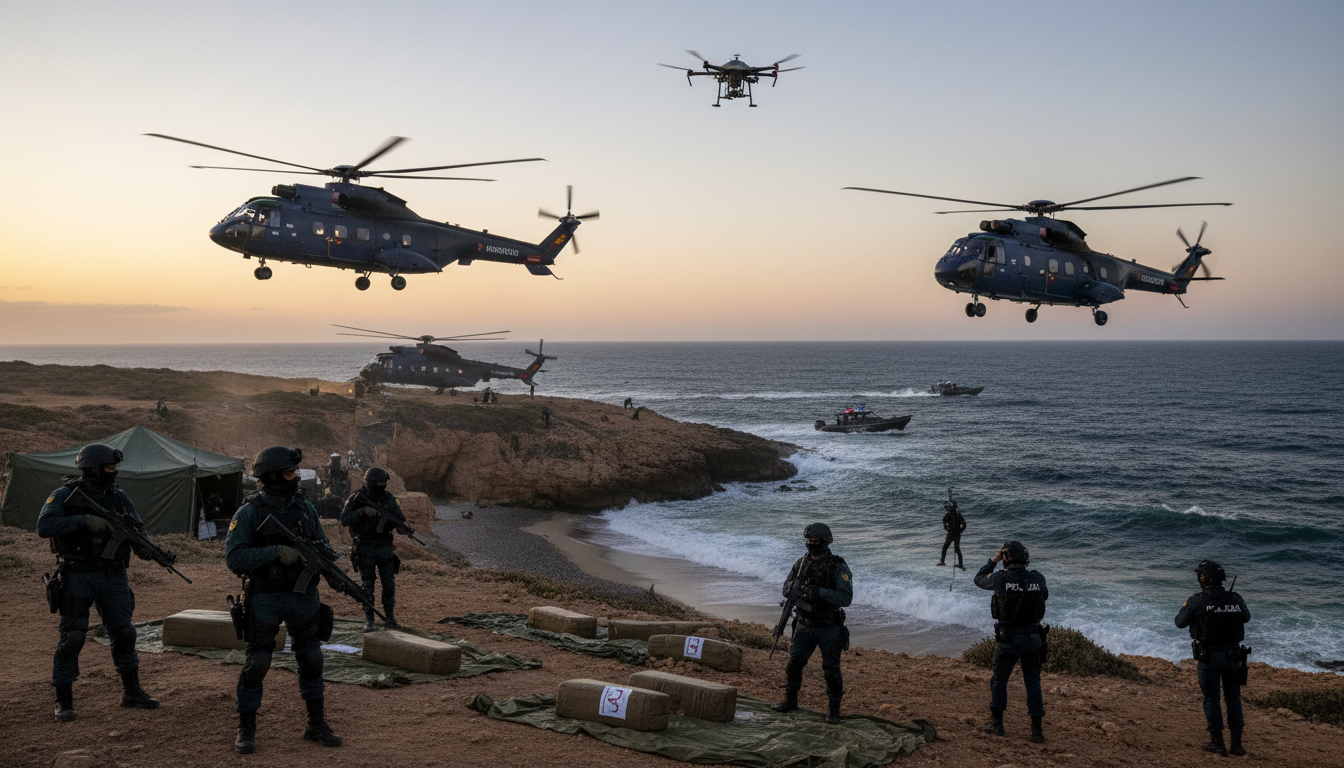
The success of this police operation does not rely solely on the vigilance of ground patrols, but on close collaboration between intelligence services. Moroccan and Spanish authorities now exchange real-time data to track these suspicious movements. The interception of these aerial means is the result of months of investigations, allowing the identification of clandestine hangars and improvised landing zones in Andalusia.
In this 2025 context, technology plays a dual role: it serves traffickers through sophisticated navigation equipment, but it also arms the anti-drug fight thanks to increasingly efficient acoustic and thermal detection systems.
The economic and structural impact of airborne trafficking
The choice of the helicopter as a smuggling vector responds to a specific economic logic: speed and avoidance of losses. Unlike maritime transport, slower and subject to tides and naval patrol hazards, the air route allows rapid rotations, minimizing exposure to risk. However, operational costs are enormous, indicating that profit margins remain extremely high despite logistical expenses.
Here is a comparative analysis of logistical vectors used in these complex operations:
| Transport vector | Investment cost 💰 | Load capacity 📦 | Detected risk level 🚨 |
|---|---|---|---|
| Helicopters | Very High (purchase + expert pilots) | Medium (fast and precise) | Medium (low altitude flight) |
| Go-Fast (Boats) | Medium | High (several tons) | High (constant maritime surveillance) |
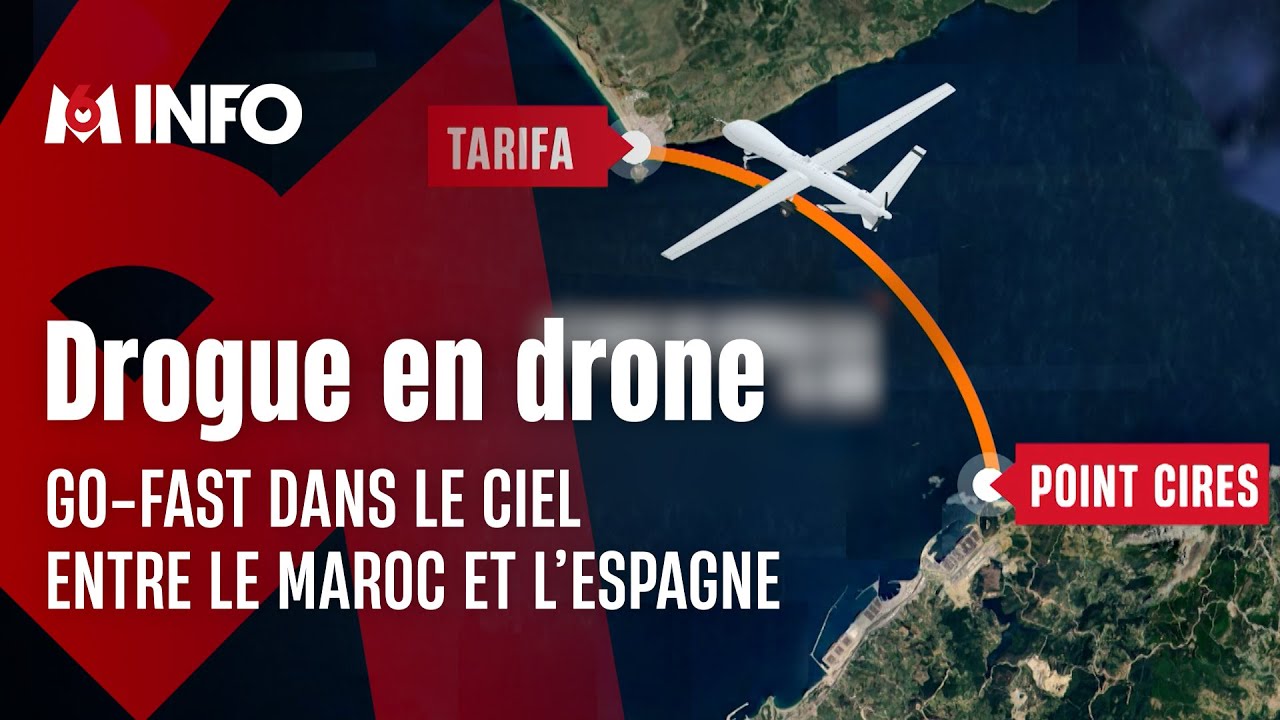
| Drones (Cargo) | Medium / High | Low to Medium | Low (difficult to intercept) |
This financial structuring demonstrates that criminal groups manage their activities like holdings, calculating the return on investment for each trip. Recent seizures, including not only merchandise but also aircraft, deliver a severe blow to the treasury of these organizations.

Collateral seizures during interventions
Beyond narcotics, law enforcement seizes various assets during these raids. The objective is to decapitalize the network to prevent rapid reconstitution. During recent operations, the following items were secured:
- 🚁 Aircraft: Several helicopters and high-capacity drones.
- 💶 Cash: Large amounts in euros intended for payment of pilots and ground logistics.
- 📱 Technological equipment: Encrypted phones and latest-generation night vision systems.
- 🚙 Land vehicles: High-engine cars used to retrieve the merchandise upon landing.
These seizures illustrate the cross-cutting skills required for the operation of these networks, ranging from aeronautical mechanics to communication security management.
What are the risks for the pilots involved?
Pilots arrested in connection with these operations face heavy prison sentences for international drug trafficking, endangering air safety, and belonging to a criminal organization.
How do helicopters escape radars?
Traffickers fly at very low altitude, often at night and with all lights off, to stay under radar coverage and avoid being detected by conventional air control systems.
What is Morocco’s role in these interceptions?
Morocco actively collaborates through the Royal Gendarmerie and intelligence services to monitor potential takeoff zones and share strategic information with their Spanish counterparts.
Do these networks use only helicopters?
No, although the helicopter is favored for its speed, these networks diversify their methods with drones, fast boats, and sometimes land vehicles for final legs.