News
Morocco aims to install its first floating regasification unit (FSRU) by 2027 in response to capacity shortages
The Urgency of Energy Sovereignty: Morocco Accelerates Towards Natural Gas
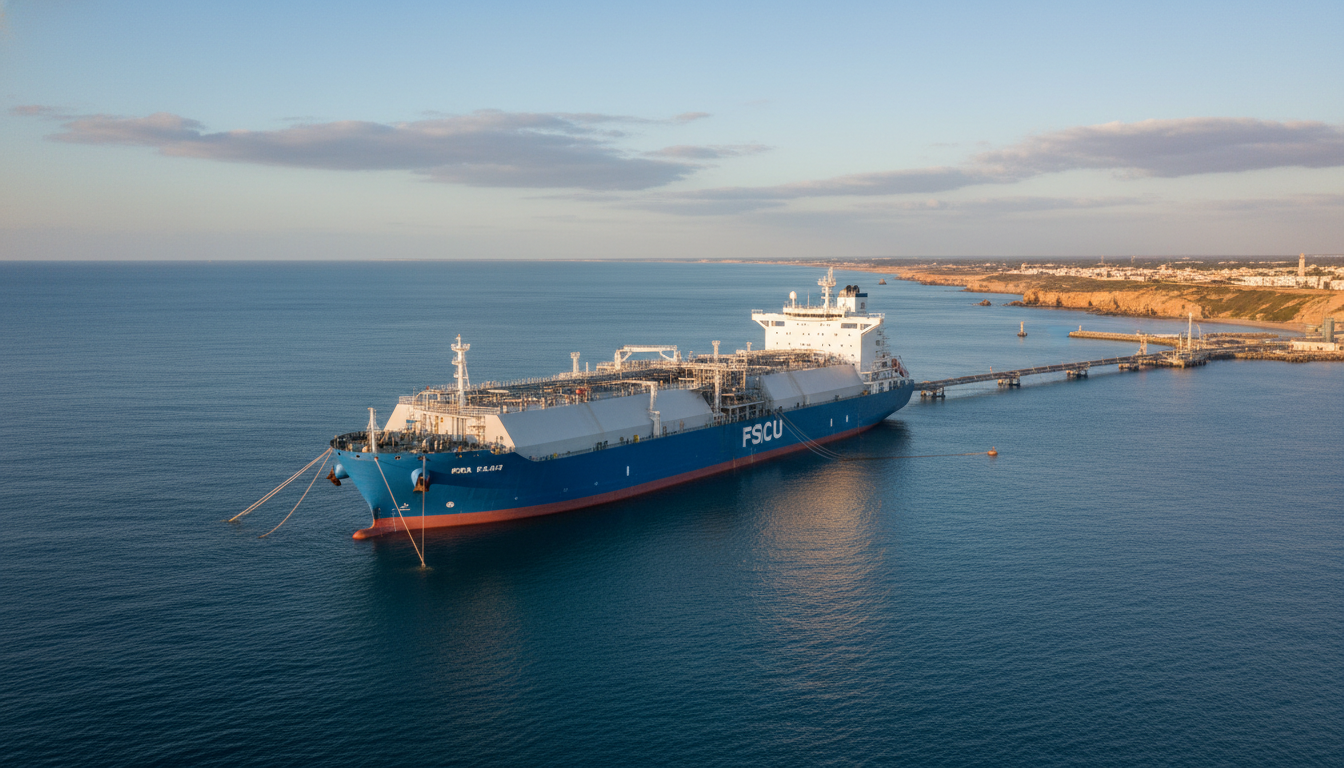
The Kingdom is taking a decisive new step in its national strategy. Faced with growing industrial demand and the need to secure its supplies, Morocco has officially stepped up the pace to equip itself with its own floating storage and regasification unit (FSRU). The goal is clear: operational commissioning by 2027. This decision comes as the country seeks to diversify its sources, no longer wanting to depend exclusively on traditional pipelines.
In this year 2025, pressure on energy capacity is being felt. Energy-intensive industries, particularly in the ceramics and automotive sectors, demand stable and competitive energy. Unlike onshore terminals, which require years of construction and colossal investments, the choice of an FSRU offers formidable flexibility. It is a pragmatic response to a complex equation: how to massively import liquefied natural gas (LNG) without waiting until the end of the decade?
A Race Against Time to Fill the Capacity Gap
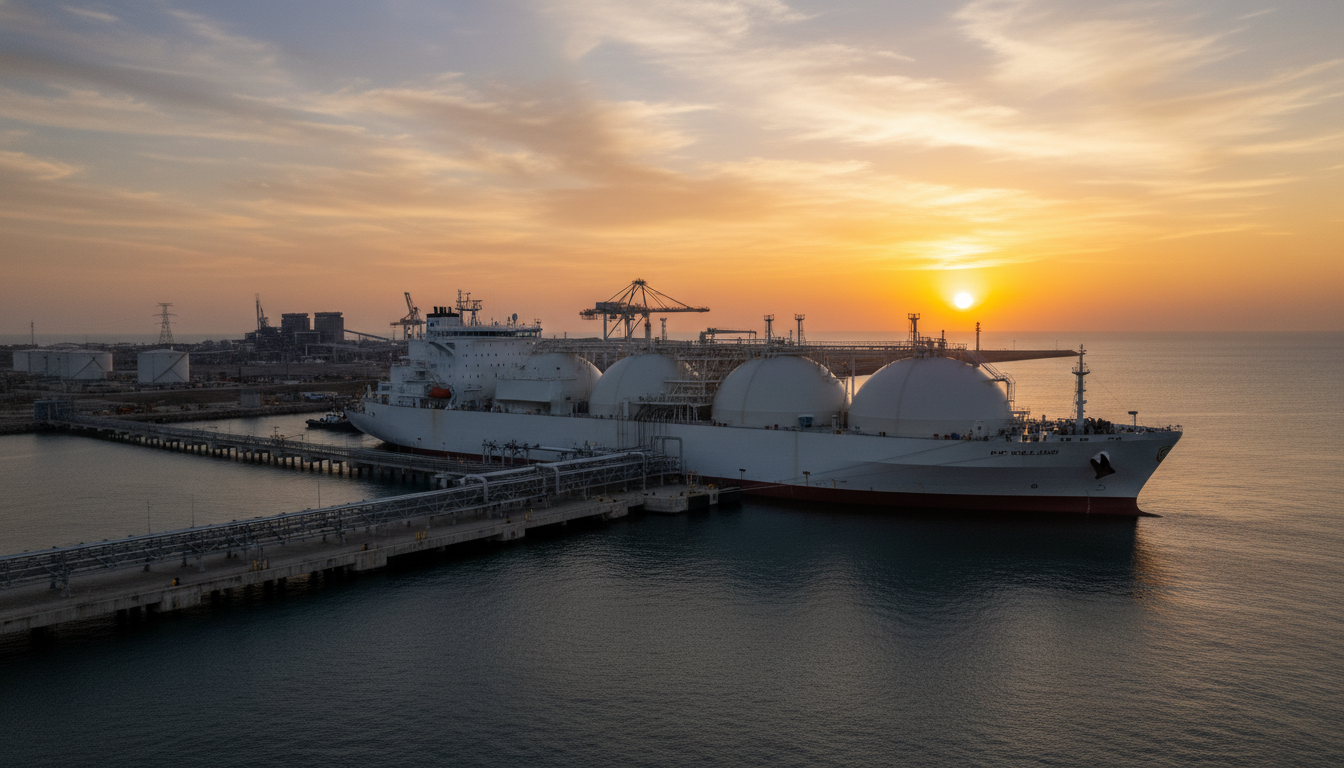
The decision to lease or acquire a regasification vessel is not trivial. It responds to a latent shortage that could slow the country’s economic momentum. Sources specialized in maritime transport, such as TradeWinds, are closely monitoring these movements, highlighting the Kingdom’s appetite for these mobile infrastructures. The principle is simple: the vessel receives gas in liquid form (LNG) transported by methane carriers, heats it to restore its gaseous form, then injects it directly into the national network.
This project fits into a broader vision aimed at positioning the country as an unavoidable Morocco LNG import hub in North Africa. By securing this infrastructure, Rabat not only ensures electricity for its households but above all guarantees service continuity for its rapidly expanding industrial zones. This is a strong signal sent to international investors: energy will be available, reliable, and diversified.
Nador West Med: The Future Strategic Anchorage Point ⚓
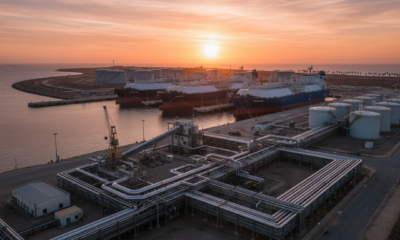
While several sites have been studied, the new port complex of Nador West Med seems to be the frontrunner to host this strategic installation. Located on the Mediterranean coast, this port offers an ideal draft and proximity to existing transport infrastructures. The installation of a floating terminal in this area would allow rapid servicing of the Oriental and the North, while connecting to the Maghreb-Europe Pipeline, reversed for national needs.
The integration of this infrastructure profoundly changes the Kingdom’s energy map. Beyond simple gas importation, it is about creating an ecosystem. Maintenance, logistics, and management of this terminal will require specialized skills, opening the way to new professions for Moroccan engineers and technicians specialized in hydrocarbons and cryogenic processes.
Comparison of Gas Importation Solutions
To better understand Morocco’s choice, it is relevant to analyze why the FSRU was favored over a conventional onshore terminal for the 2027 deadline.
| Criteria | Conventional Onshore Terminal | Floating Unit (FSRU) 🚢 |
|---|---|---|
| Implementation Timeframe | 5 to 7 years | 1 to 3 years (chosen solution) |
| Initial Cost | Very high (Heavy civil engineering) | Moderate (Lease or conversion) |
| Flexibility | Fixed and rigid | Mobile, can be moved |
| Local Environmental Impact | Significant land footprint | Low (offshore infrastructure) |
This table perfectly illustrates why, given the urgency of demand, the floating option is the most rational for the short and medium term.
Impact on Employment and Local Economic Development
The arrival of such technology in Morocco is not limited to pipes and valves. It is a lever for human growth. To operate these sophisticated ships and quay installations, the need for qualified labor will intensify. We are talking here about opportunities for young graduates in energy engineering, industrial safety, and port logistics. Skills transfer will be a key component of contracts signed with international operators.
Moreover, the availability of abundant and regular gas energy is a major attractiveness factor. Heavy industries, often hesitant to settle in areas where electricity is expensive or unstable, will find in this project a guarantee of sustainability. This could trigger a wave of foreign direct investment (FDI) in the Oriental region, transforming the local socio-economic fabric.
Here are the concrete advantages expected for the Moroccan economy:
- 🚀 Immediate securing of electricity supply for consumption peaks.
- 🏭 Reduction of energy bills for industrialists, improving their export competitiveness.
- 🌍 Strengthening of Morocco’s geopolitical position as the energy gateway to Africa.
- 💼 Creation of direct and indirect jobs in port management and gas maintenance.
- 🔄 Contractual flexibility allowing to purchase gas on the global spot market at the best price.
What exactly is an FSRU?
An FSRU (Floating Storage and Regasification Unit) is a specialized methane carrier or barge that can store liquefied natural gas (LNG) and convert it back into gas to inject it directly into the terrestrial distribution network.
Why is Morocco targeting the year 2027?
This date corresponds to an anticipation of the rise in industrial and domestic energy demand. It is the realistic timeframe to complete technical studies, sign commercial contracts, and install the necessary port infrastructure.
Where will this unit likely be installed?
Although several sites have been considered, the port of Nador West Med is the most serious candidate due to its strategic position in the Mediterranean and its developing logistical capacities.
Does this project replace renewable energies?
Absolutely not. Natural gas is considered a transition energy. It complements the intermittency of renewable energies (solar and wind) to ensure constant stability of the national electrical network.