
The employment market in Morocco is undergoing rapid transformation in 2025, driven by increased digitalization of administrative services. For candidates as well as recruiters, the ease of procedures has become an absolute priority. Among the essential documents that punctuate professional life, the anthropometric form holds a central place. Often confused with the criminal record, it remains distinct by its nature and its mode of acquisition. Understanding its role is essential to navigate calmly through current recruitment processes.
The anthropometric form in Morocco: identity and security above all
Contrary to common belief, this document is not limited to a mere bureaucratic formality. The anthropometric form is an official record issued by the General Directorate of National Security (DGSN). It compiles biometric and judicial data of a citizen. Its primary purpose lies in certifying the physical and moral identity of an individual at a given moment.
In the human resources world, this document acts as a token of trust. It allows employers to verify the absence of records incompatible with the targeted position, especially in sensitive sectors such as finance, private security, or education. It is a key document to ensure the integrity of teams.
A successful digitalization: the E-Police portal
The era of long queues in front of police stations seems over. Since the effective implementation of the platform at the end of 2024, 2025 marks the massive adoption of the E-Police portal by citizens. This digital transition is part of a royal ambition to modernize public administration.
From now on, anyone holding the Electronic National Identity Card (CNIE) can submit their application remotely. This time-saving is precious for job seekers who often have to prepare multiple files simultaneously, for example to respond to a call for applications similar to the CNSS competition which demands rigor and administrative speed.
Here are the simplified steps to obtain this document in 2025:
- Access the official portal epolice.ma.
- Authentication via the “My digital identity” application (Makhribiar).
- Payment of the stamp duty (30 DH) online.
- Choice of retrieval method (in person or, according to recent developments, via dedicated kiosks).

Fundamental distinction: Anthropometric form vs Criminal record
It is common to see these two terms used interchangeably, yet they come from different authorities and do not serve exactly the same legal purposes. Confusion at this level can delay a hiring file.
To clarify these differences and help candidates better prepare their administrative files, here is a technical comparison:
| Characteristic | Anthropometric Form | Criminal Record Extract |
|---|---|---|
| Issuing Authority | Police (DGSN) | Ministry of Justice |
| Main Content | Biometric data, photo, background | Final criminal convictions |
| Obtaining 📍 | Police station or E-Police | Court or electronic counter |
| HR Usage | Formal identification and security | Strict criminal check |
This distinction is crucial. For example, when preparing for public service entrance exams, understanding which document is required avoids file rejections due to non-compliance. It demands the same rigor as that required during registrations for major national exams, such as those seen during past recruitment waves of the National Social Security Fund.
Anthropometry: between science and administration
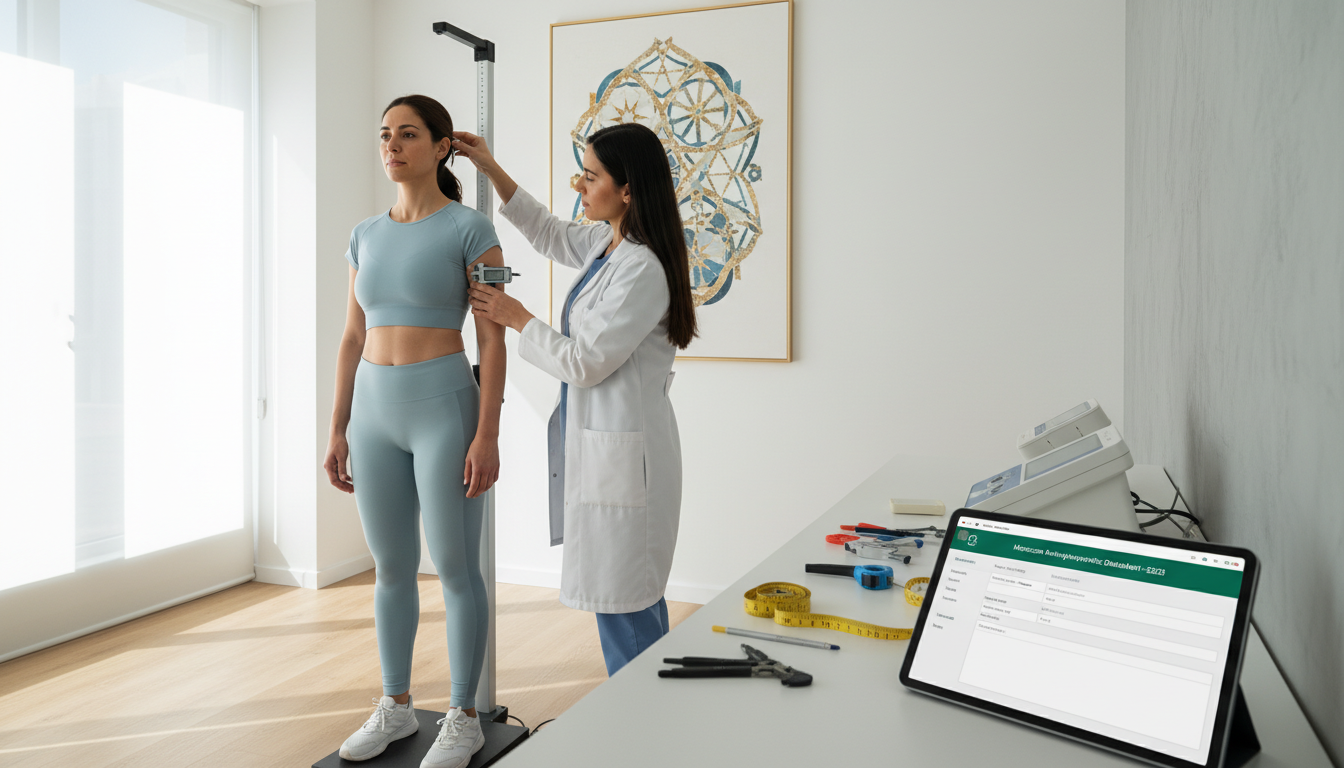
If the term “anthropometric” sounds daunting, it simply refers to the science of measuring humans. In the police context, it concerns identification (fingerprints, height, facial shape). However, it is interesting to note that anthropometric analysis holds another key importance outside police stations, especially in occupational health and industrial ergonomics.
Although the police form does not serve this purpose, body measurements are key indicators for public health. They allow, in a medical context, to perform nutritional monitoring and adapt workstations to the morphology of the Moroccan population. In 2026, the most advanced companies use this data (anonymized and consented) to improve employee well-being, thus reducing musculoskeletal disorders.

Errors to avoid when applying
Even with digitalization, some precautions remain necessary to avoid blocks. The validity of the document is generally three months. It is therefore useless to request it too far in advance if you do not have an ongoing recruitment process. Also, ensure that the information entered on the portal exactly matches that on your CNIE.
A common mistake concerns dual nationals or Moroccans living abroad (MRE). For the latter, the procedure may pass through consulates, although the digital portal tends to universalize access regardless of place of residence. Vigilance is therefore necessary to ensure your file remains “recruitable” at any time.
What is the cost of the anthropometric form in 2025?
The cost of the fiscal stamp required to obtain the anthropometric form is set at 30 Dirhams. This payment is now mainly done online via the E-Police portal.
Can one obtain an anthropometric form for a third party?
No, the request is strictly personal as it concerns private and biometric data. Only the person concerned can initiate the procedure, except in very specific cases of legalized proxy for compelling reasons.
What is the validity period of this document?
The anthropometric form has a legal validity of 3 months from its date of issue. After this period, it is necessary to make a new request for the document to be administratively accepted.
What to do if the E-Police portal is inaccessible?
In case of maintenance or failure of the digital portal, the classic procedure remains in force. You must go to the police station nearest your place of residence with your CNIE to make the request physically.

No responses yet